DEHA’s 3-Layer QA Framework: Engineering Quality as a System
February 26, 2026





In global IT outsourcing, quality cannot rely on individual expertise or end-of-cycle testing alone. True quality is not an activity — it is a system.
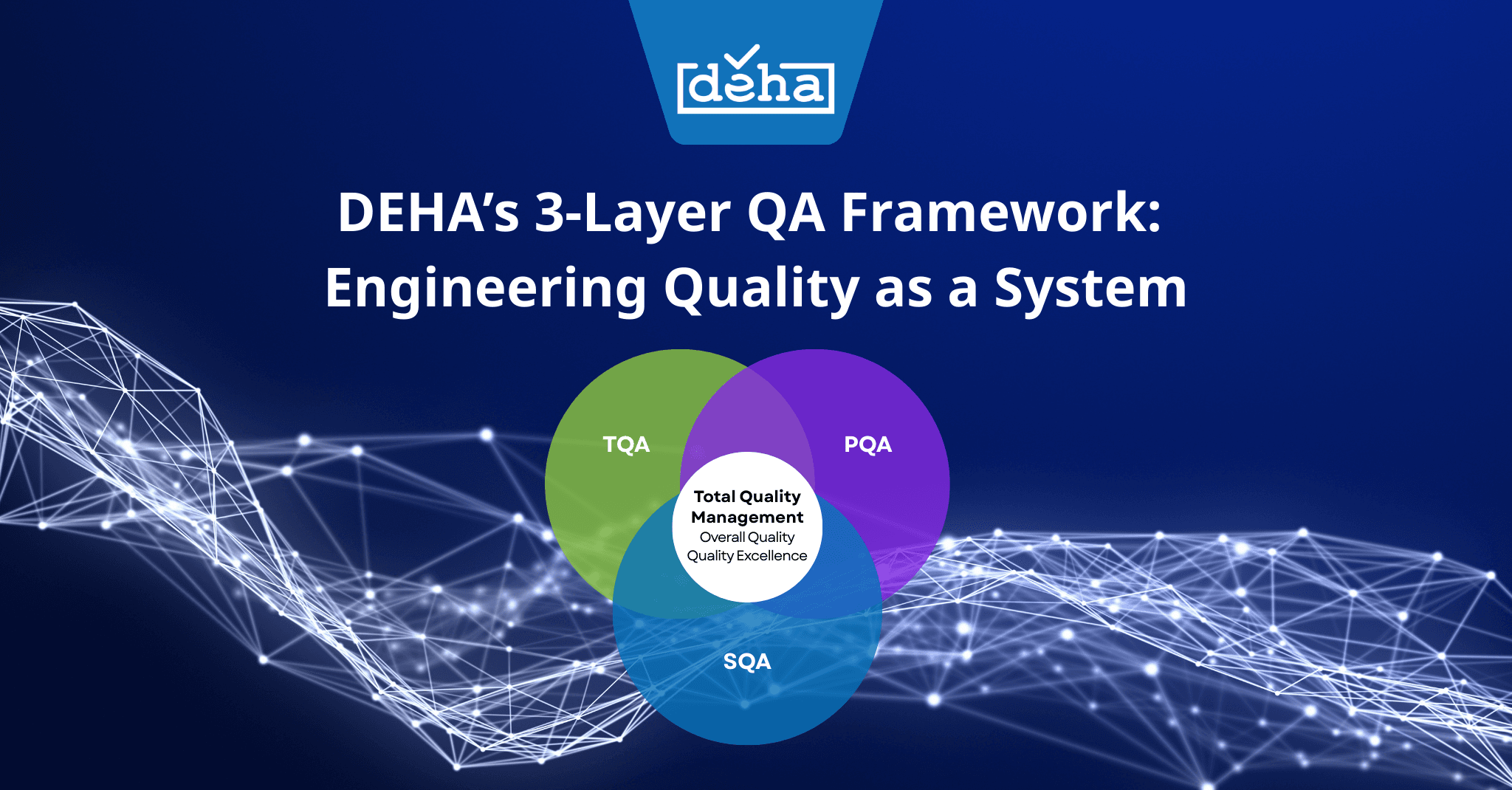
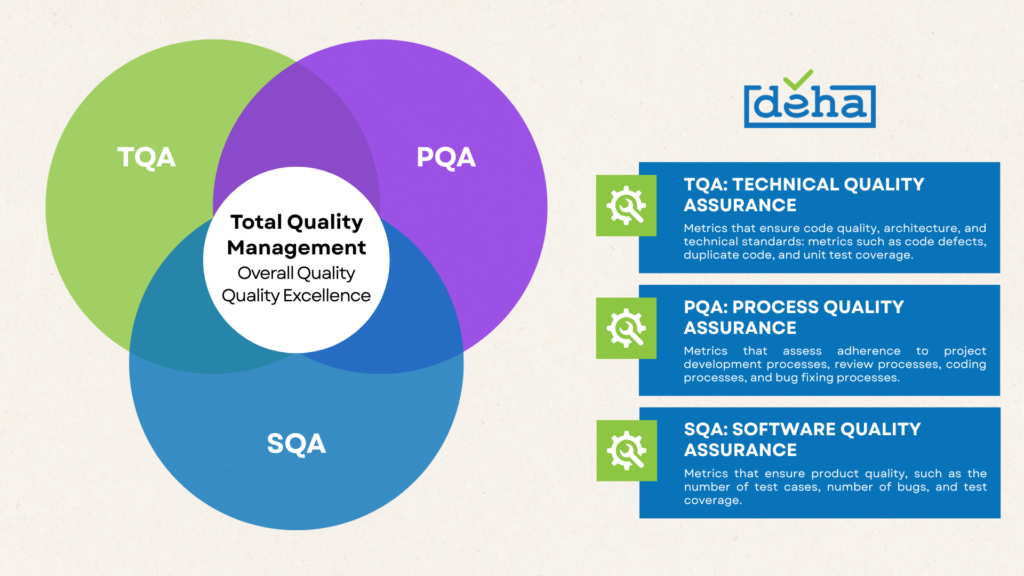
At DEHA, we design quality assurance as an operational foundation. Our 3-layer QA framework — TQA, PQA, and SQA — governs technology, process, and delivery outcomes across the entire project lifecycle.
This is not traditional QA. It is structured engineering governance.
Modern software delivery faces systemic risks:
Single-layer testing at the final phase cannot mitigate these risks. DEHA addresses them structurally through three independent yet interconnected control layers.
Governing the Engineering Foundation
TQA ensures that code quality, system architecture, performance, and security meet measurable internal standards.
Key controls include:
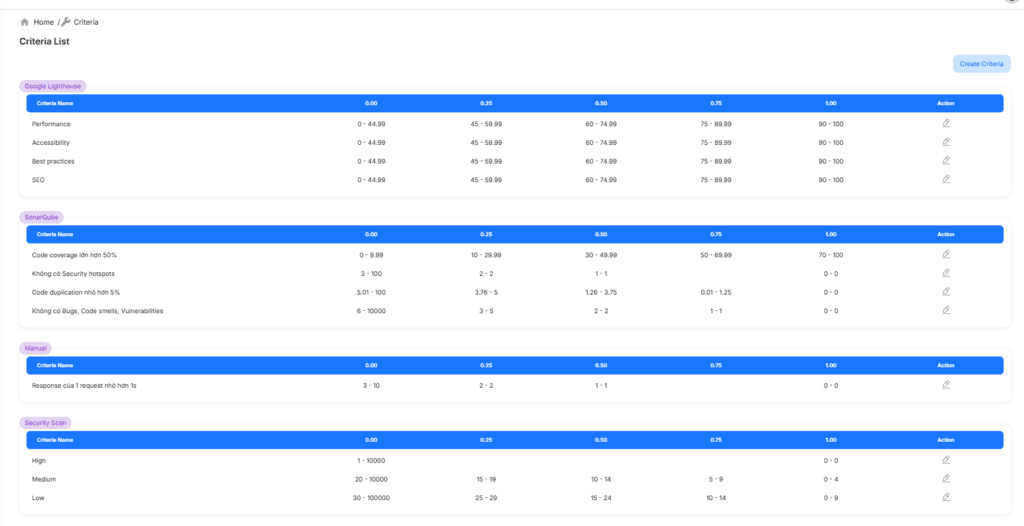
Projects are quantitatively evaluated against defined internal thresholds. If standards are not met, corrective action plans are mandatory.
Business Impact:
TQA ensures that engineering decisions today do not become liabilities tomorrow.
Governing How the Product Is Built
High-quality software is the outcome of disciplined processes.
PQA ensures:
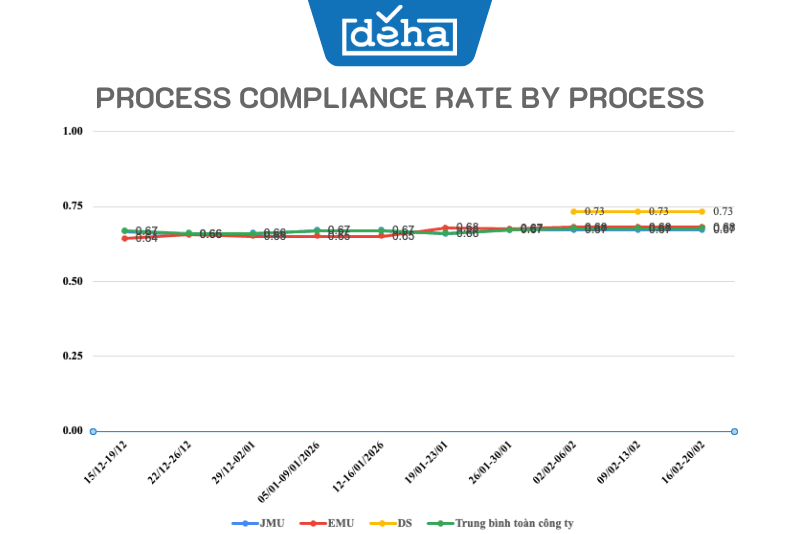
Business Impact:
In global IT outsourcing, delivery governance is as critical as engineering capability.
Validating Production Readiness
SQA verifies that the final software performs reliably in real-world environments.
Scope includes:
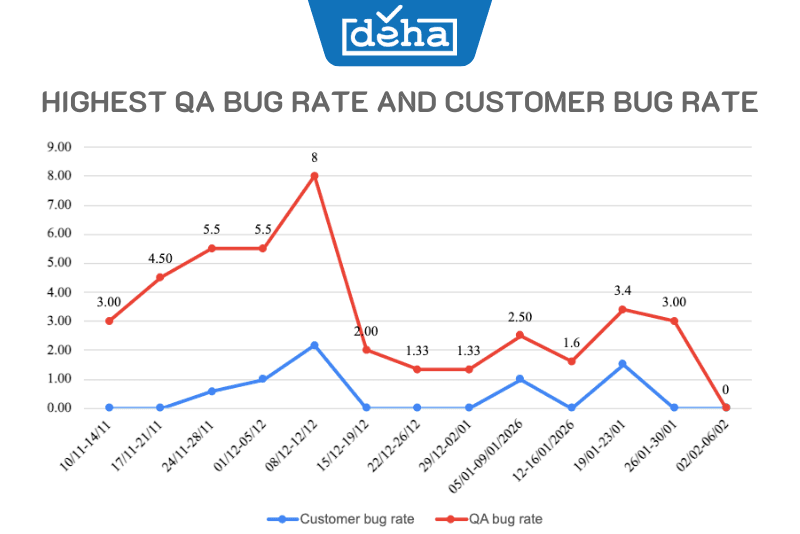
SQA minimizes operational risk before user exposure and protects client brand reputation.
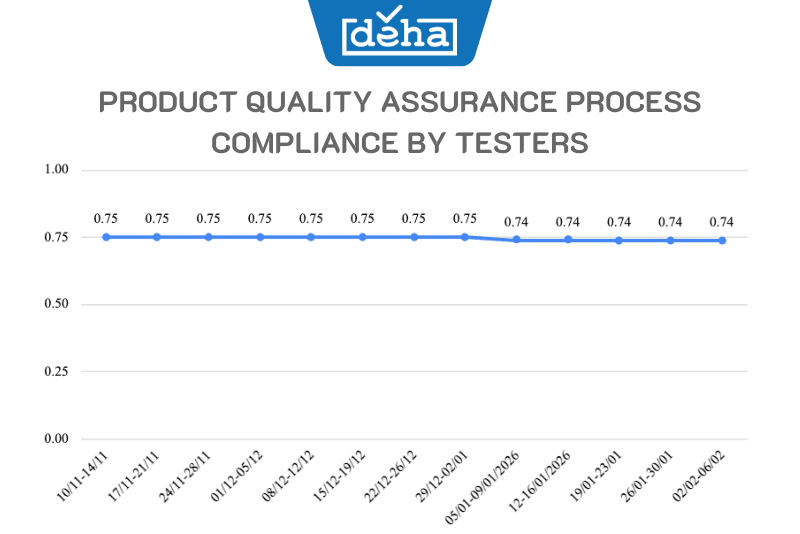
Each layer serves a distinct governance function:
Together, they form a proactive risk prevention system.
We do not wait for defects to appear. We design systems that make defects structurally unlikely.
At DEHA, quality assurance is not a final checkpoint. It is embedded into how we operate.
Through our 3-layer QA framework, we ensure:
In global IT outsourcing, trust is built through structure — not promises.