Engineering Governance for AI & CloudSystems
March 02, 2026






In the AI era, software rarely fails because of missing features.
It fails because of weak engineering governance.
As organizations accelerate AI and cloud adoption, system complexity increases exponentially. Codebases expand, integrations multiply, data flows intensify, and performance expectations tighten. Without structured governance, technical debt accumulates silently, performance degrades gradually, and security risks compound over time.
At DEHA, Technical Quality Assurance (TQA) is not a final inspection phase.
It is a governance architecture embedded throughout the entire project lifecycle.
Our 4-Layer TQA Model ensures that quality is measurable, enforceable, and economically sustainable.
Many vendors define quality as “software that works.”
At DEHA, quality is defined by:
Governance transforms quality from a checklist into a managed system.
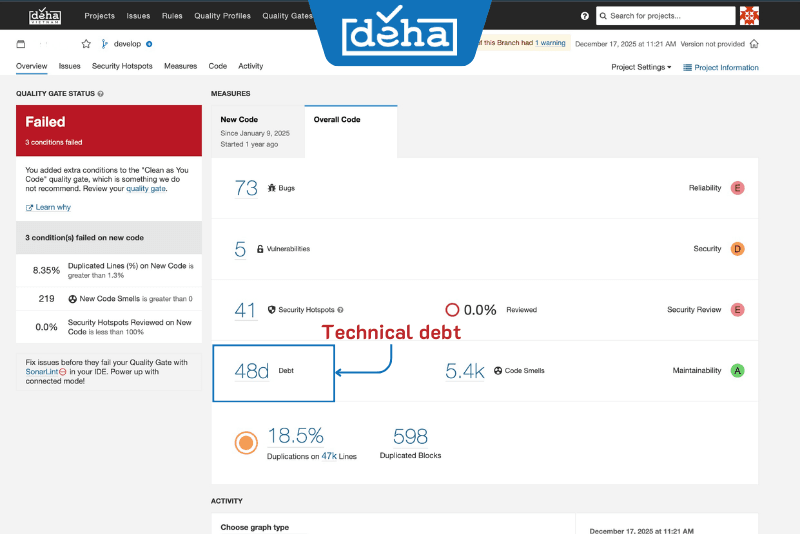
Technical debt compounds silently.
Without structural discipline, scalability becomes fragile and maintenance costs escalate.
DEHA applies continuous static code analysis using SonarQube across multiple programming languages to maintain structural integrity.
Key control thresholds include:
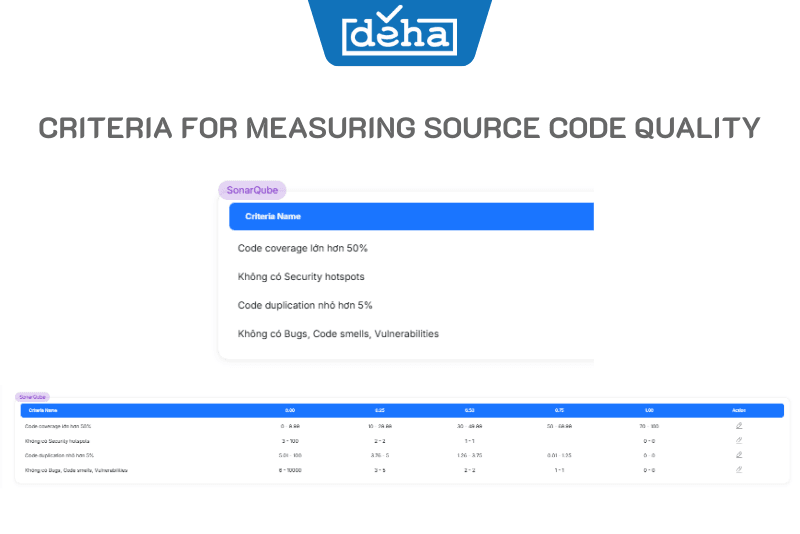
Unlike vendors who treat technical debt as an internal issue, DEHA quantifies it transparently. SonarQube estimates remediation effort in developer days, translating abstract quality issues into economic impact.
Structural governance ensures that systems remain maintainable and scalable long after deployment.
Quality is not measured by whether software runs.
It is measured by how sustainably it evolves.
Performance is not cosmetic optimization.
It is revenue-sensitive engineering.
In modern digital environments, latency directly influences user engagement, conversion rates, and brand perception.
DEHA evaluates production readiness using Google Lighthouse, assessing:
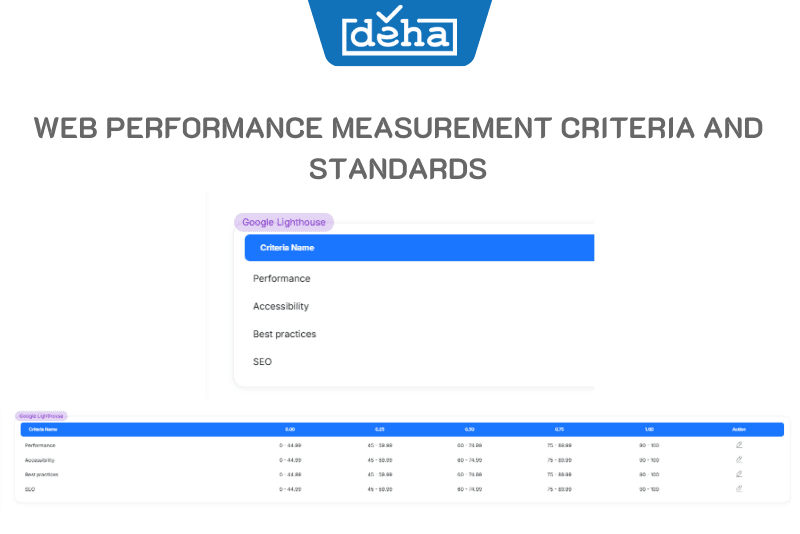
This measurable framework ensures systems are production-ready under real user conditions.
Business impact includes:
Continuous monitoring enables early detection of performance degradation before it impacts end users.
Performance governance protects both user experience and business outcomes.
User-perceived latency defines digital trust.
Research consistently shows that even small delays reduce satisfaction and conversion performance. Systems that scale without latency discipline inevitably degrade user experience.
Beyond automated tools, DEHA enforces a strict operational benchmark:
System response time < 1 second.
Validation includes:
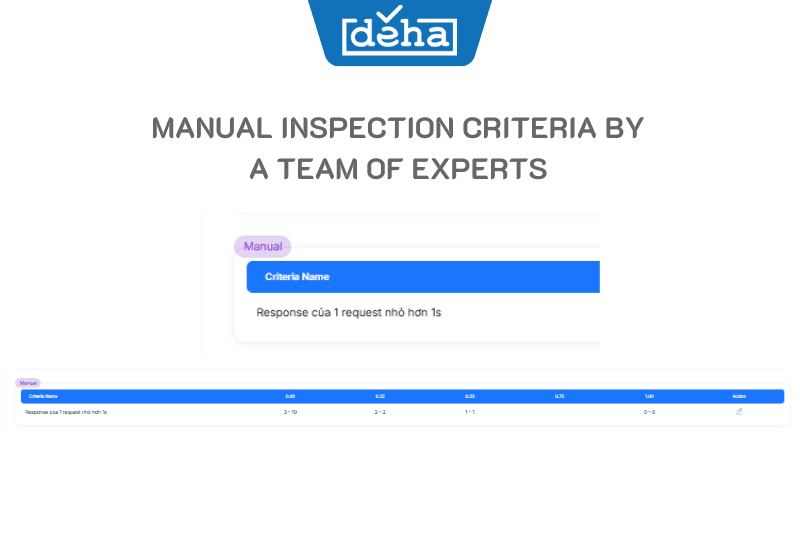
This discipline ensures experiential stability under real-world growth conditions.
Speed is not a feature.
It is operational accountability.
Security vulnerabilities propagate across ecosystems.
In AI- and cloud-driven architectures, a single exploitable weakness can compromise entire systems.
DEHA conducts structured security testing using OWASP ZAP, aligned with OWASP Top 10 international standards
Vulnerabilities are categorized by severity:
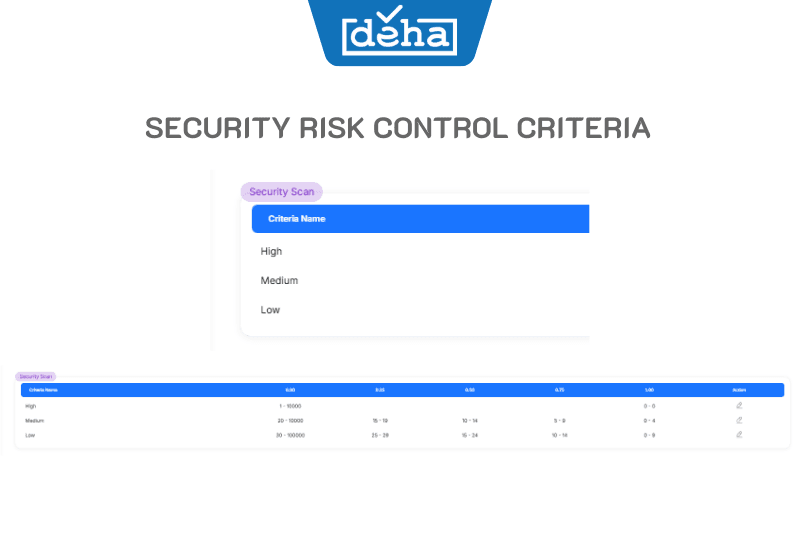
Testing includes:
Critical findings trigger mandatory remediation protocols.
Security is architected early, not patched reactively.
Governance must be measurable to be enforceable.
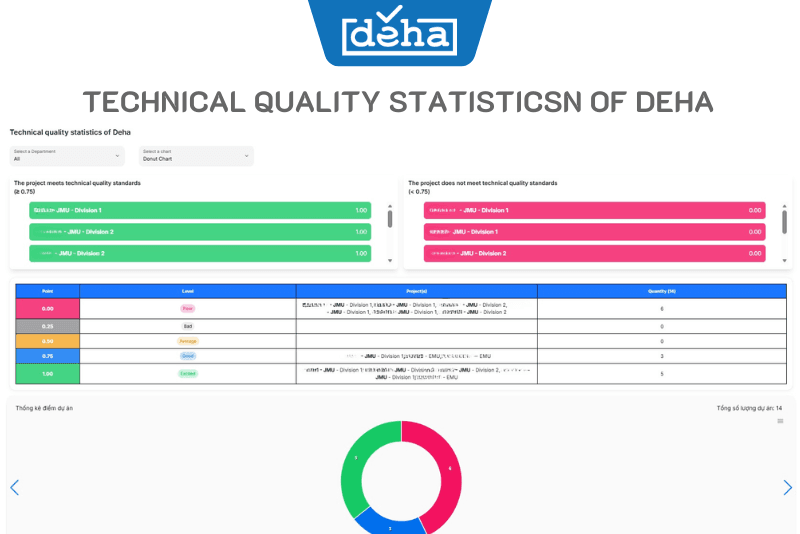
Each DEHA project receives an internal technical quality score ranging from 0.0 to 1.0:
Quality scores trigger:
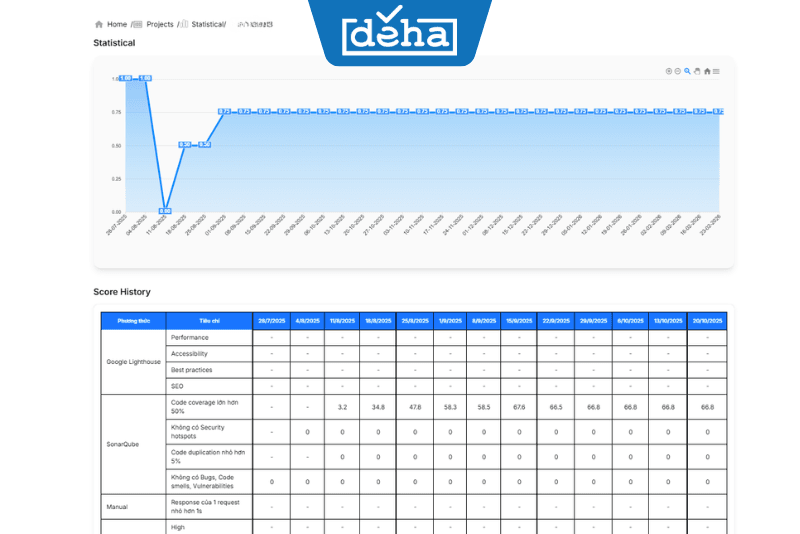
An independent TQA team aggregates and reviews quality metrics weekly, ensuring issues are identified early and resolved before becoming structural risks.
Governance without measurement is symbolic.
Measurement without enforcement is ineffective.
DEHA integrates both.
DEHA’s 4-Layer TQA Governance Model ensures:
In global IT services, engineering talent is important.
But talent alone does not guarantee sustainability.
In the AI era, systems must not only scale.
They must remain governed.
At DEHA, quality is not inspected at the end.
It is architected into the system from day one.