How to Improve Data Management with AI Technology
January 23, 2025





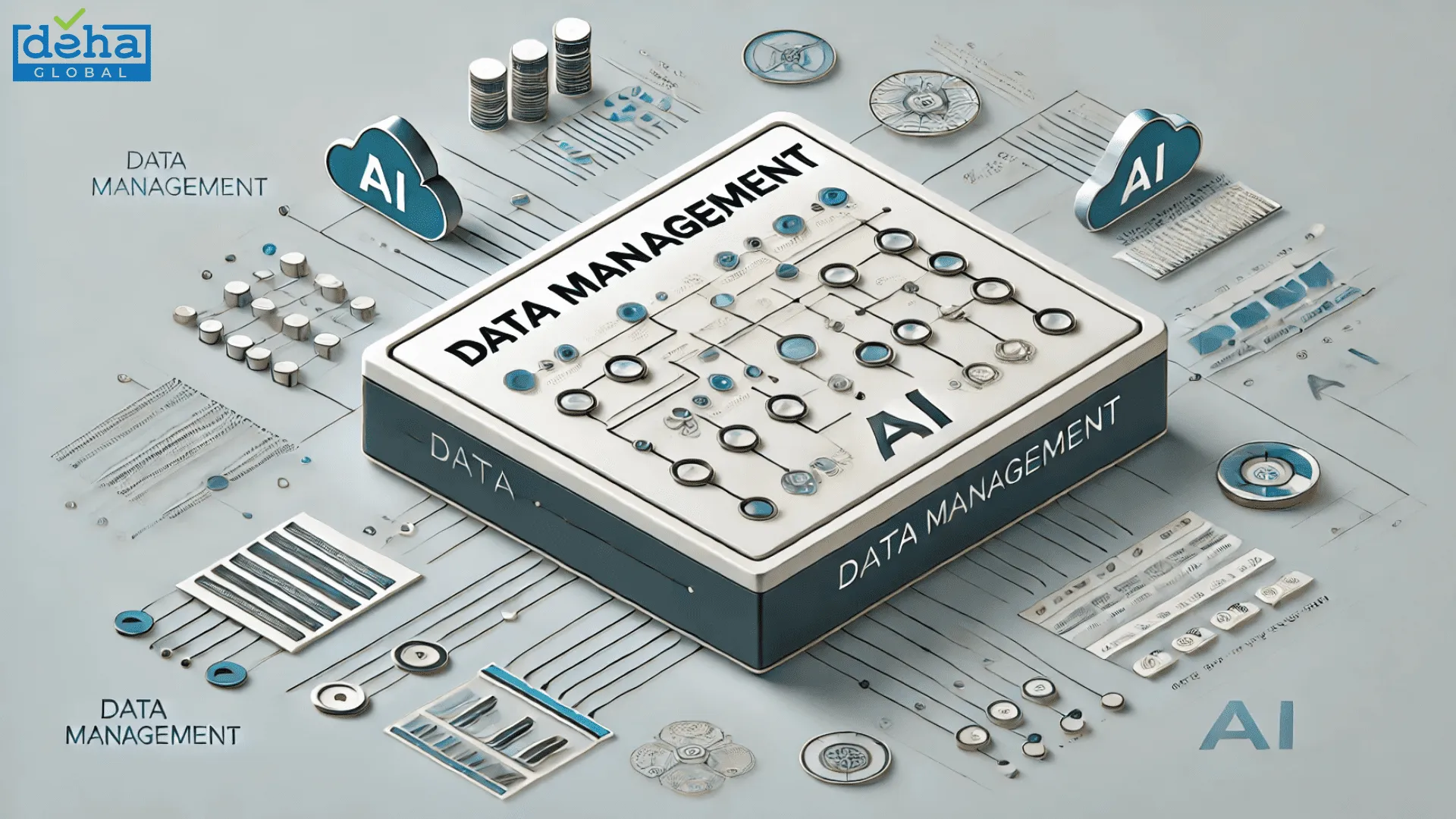
For data-driven management to be successful, it is important to effectively analyze huge amounts of data and extract valuable insights.
AI technology is attracting attention as a powerful tool to achieve this.
In this article, we will introduce specific ways that AI can support data-driven management.
AI uses machine learning and deep learning algorithms to extract complex patterns and trends from huge data sets, allowing businesses to make data-driven predictions and decisions.
For example, AI clustering technology can be used to analyze customer purchasing history and behavioral data to identify groups of customers with similar characteristics.
This allows you to develop personalized marketing strategies and target your audience more efficiently.
In addition, by utilizing regression analysis and predictive analysis, sales and demand forecasts can be made more accurately, enabling optimization of inventory management and production plans.
AI-based data analysis enables real-time data processing and insights to be provided, helping to make faster decisions.
For example, by analyzing sensor data and social media data in real-time, it is possible to immediately grasp market changes and customer reactions, enabling a rapid response.
This enables companies to respond flexibly to changes in the competitive environment and promote business growth.
Regression analysis, time series analysis, clustering, etc. are a few of the several approaches used in artificial intelligence prediction analysis. Using historical data, regression analysis forecasts patterns and future numbers.
Sales statistics, for instance, might help one project future sales and create suitable inventory control and sales plans. Time series analysis models the variations of data over time and identifies seasonal trends and cycles.
This facilitates demand forecasting and creates plans to evolve with the market.
Real-time data processing and predictions made possible by artificial intelligence predictive analytics will enable you to make quicker and more accurate judgments.
For instance, real-time analysis of sensor data and social media information can help forecast consumer patterns and market changes, therefore guiding quick action.
This helps us to maximize corporate possibilities and react fast to changes in the competitive environment.
AI can analyze massive amounts of customer data quickly and precisely and provide personalized services and products to each customer.
A personalized experience mainly consists of the following elements: First, AI technology collects and analyzes customer data, including purchase history, behavioral data, search history, social media mentions, and many other types of data.
AI uses this data to understand customer preferences and needs and spot patterns and trends.
These insights are then used to generate personalized offers and content for the customer.
For example, on an e-commerce site, AI can analyze customers’ past purchases and browsing histories to recommend the best products and offers for each user.
This makes it easier for users to find the right product for them and increases their willingness to purchase.
One example of business process automation using AI is RPA (Robotic Process Automation).
RPA uses software robots to automate routine and repetitive tasks.
For example, automating invoice processing and data entry tasks frees up employees to focus on higher value-added tasks, speeding up operations and reducing costs.
AI technology also contributes to optimizing business processes by analyzing data. Machine learning algorithms find patterns in large amounts of data and identify bottlenecks and areas for efficiency improvement.
This will highlight areas for process improvement and allow for more effective automation.
AI-driven business process automation is also evident in the field of customer support, where AI chatbots respond to customer inquiries around the clock and instantly resolve common questions and simple issues.
This reduces the burden on your customer service department and improves the quality of customer support.
Finally, in risk management, AI can automatically identify risk factors from massive amounts of data and predict and evaluate risks.
For example, in the financial industry, AI algorithms analyze transaction data to detect signs of fraud and money laundering.
Machine learning models study historical trading data to detect anomalous patterns in real time that deviate from normal trading patterns.
This makes it possible to take measures before risks become apparent.
In the field of anomaly detection, AI technology is used in various industries. In the manufacturing industry, data from sensors can be analyzed to detect machine failures and quality issues early.
For example, AI can monitor vibration and temperature data from machinery and detect unusual patterns to perform preventative maintenance and minimize downtime.
The introduction of AI technology will further evolve data-driven management, enabling more efficient and strategic decision-making.
By leveraging the power of AI—including advanced data analytics, predictive analytics, delivering personalized experiences, automating business processes, managing risk, and detecting anomalies—businesses can unlock value from their data and gain a competitive edge.
The key to future business success will be to actively adopt AI technology and advance efforts toward achieving data-driven management.