International Standards That Create DEHA’s Competitive Advantage
March 05, 2026






In global technology services, value is not defined solely by the final product. It is defined by how that product is created — with transparency, stability, and risk control embedded throughout the process.
When clients select a technology partner, they entrust that partner with access to some of their most critical assets. The key question is not only whether the team is technically capable, but whether the organization has a governance system strong enough to protect client interests.
At DEHA, our operational model is built on internationally recognized standards to ensure that every project is delivered efficiently and safeguarded comprehensively.
Two foundational frameworks underpin this system:
Certifications create value only when embedded into real operational practice. At DEHA, these standards are translated into structured protection mechanisms across three levels:
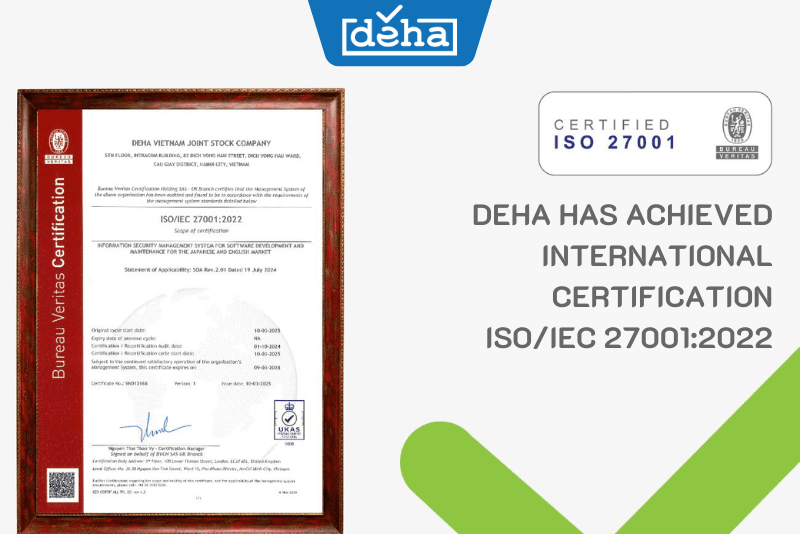
In every technology project, data is the most valuable asset. Risks such as data leakage, unauthorized access, or uncontrolled processing can lead to serious financial and reputational consequences.
DEHA’s Information Security Management System (ISMS), aligned with ISO/IEC 27001:2022, ensures that:
Security governance is not limited to technology. It involves people, processes, and environmental controls. From security awareness training to device and workplace management, all elements operate within a unified risk management framework.
Clients can therefore trust that strategic data, user information, and intellectual property are protected through a structured, internationally validated security governance system.
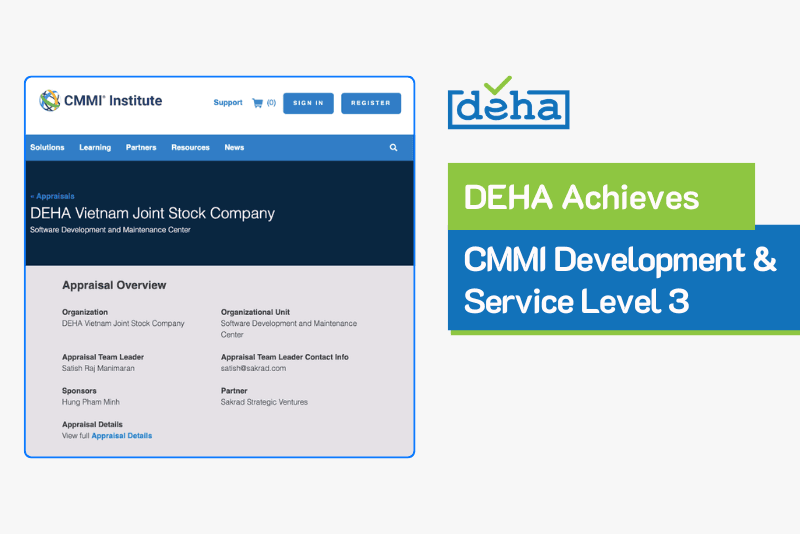
A successful project requires more than delivering a product that meets functional requirements. It requires predictable control over scope, timeline, and budget.
Common risks in technology partnerships often arise from:
Achieving CMMI Level 3 confirms that DEHA’s development and service processes are:
In practice, this includes:
In one of our development projects, we identified a requirement deviation during the Peer Review and change control stage. If it had not been detected early, it could have resulted in significant rework during UAT and delayed the overall project timeline.
Quality at DEHA does not depend on individual effort. It is ensured through a structured system designed to predict and control risk.
Clients benefit from:
In rapidly evolving markets, a technology partner must do more than complete a single project. The partner must be capable of scaling and collaborating sustainably over time.
Standardized international processes enable DEHA to:
This is particularly important for global enterprises managing multiple parallel initiatives or expanding rapidly.
Clients are not dependent on a few key individuals. Stability is ensured at the organizational level.
Process governance begins at project initiation and continues until successful delivery.
To ensure standardized processes are applied in reality — not merely documented — DEHA operates a structured 6-Step Quality Control Process led by an independent PQA (Process Quality Assurance) department.
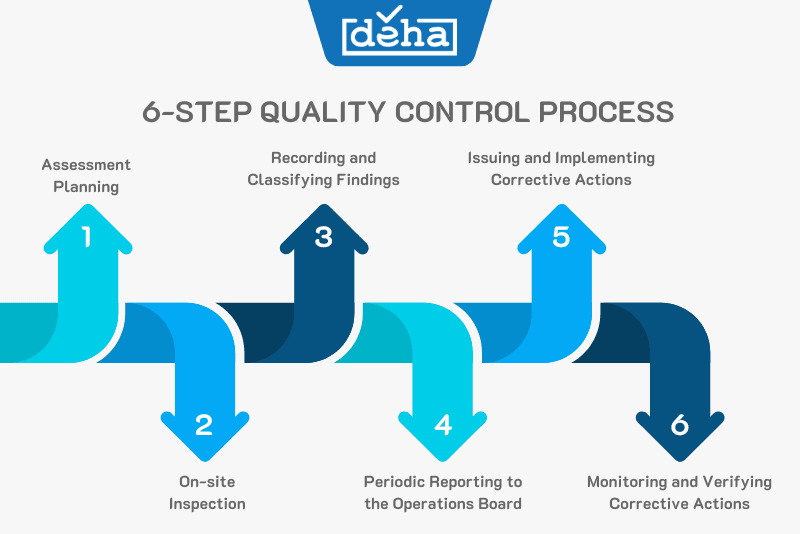
Each audit cycle begins with structured Assessment Planning, defining scope and governance from the outset.
The scope includes:
This ensures process oversight is systematic, proactive, and aligned with real project conditions.
During On-site Inspection, the PQA team validates that defined processes are properly executed.
The objective is to eliminate the risk of processes existing only on paper.
All audit observations are formally documented through Recording and Classifying Findings.
Findings are categorized as:
Results are recorded in a centralized tracking system to ensure traceability and accountability across projects.
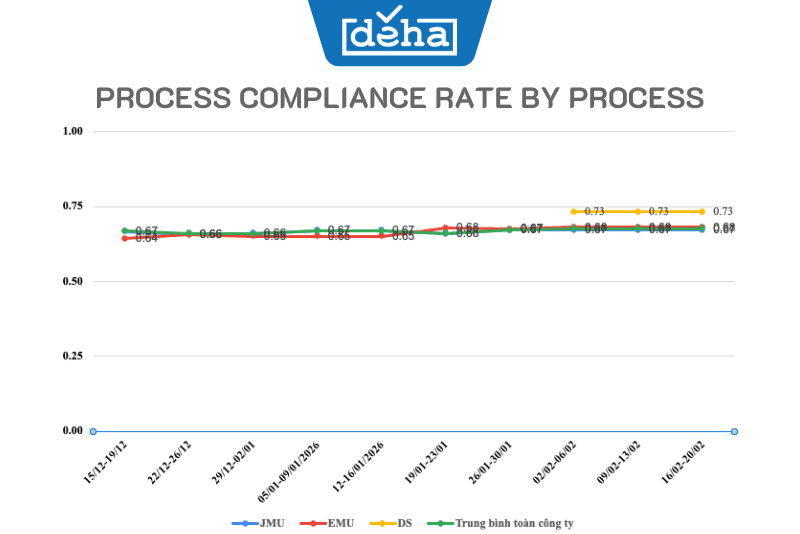
Through Periodic Reporting to the Operations Board, audit results are escalated beyond individual projects.
Reports include:
This creates a dual-layer governance structure:
When deviations are identified, the process moves to Issuing and Implementing Corrective Actions.
Project Managers and Technical Consultants are required to:
Every non-conformity must result in a structured remediation plan.
The final phase focuses on Monitoring and Verifying Corrective Actions.
The PQA team evaluates:
Only when effectiveness is confirmed is the non-conformity formally closed.
This ensures the Quality Control Process operates as a genuine continuous improvement loop — not merely a compliance exercise.
International standards are not symbolic credentials.
At DEHA, ISO/IEC 27001:2022 and CMMI Level 3 are embedded into daily operations, project workflows, and internal control mechanisms.
Clients receive not only a technically sound solution, but also:
The true value of a technology partner lies not in promises, but in the system that supports them.
At DEHA, that system is built on international standards and strengthened through continuous improvement.