

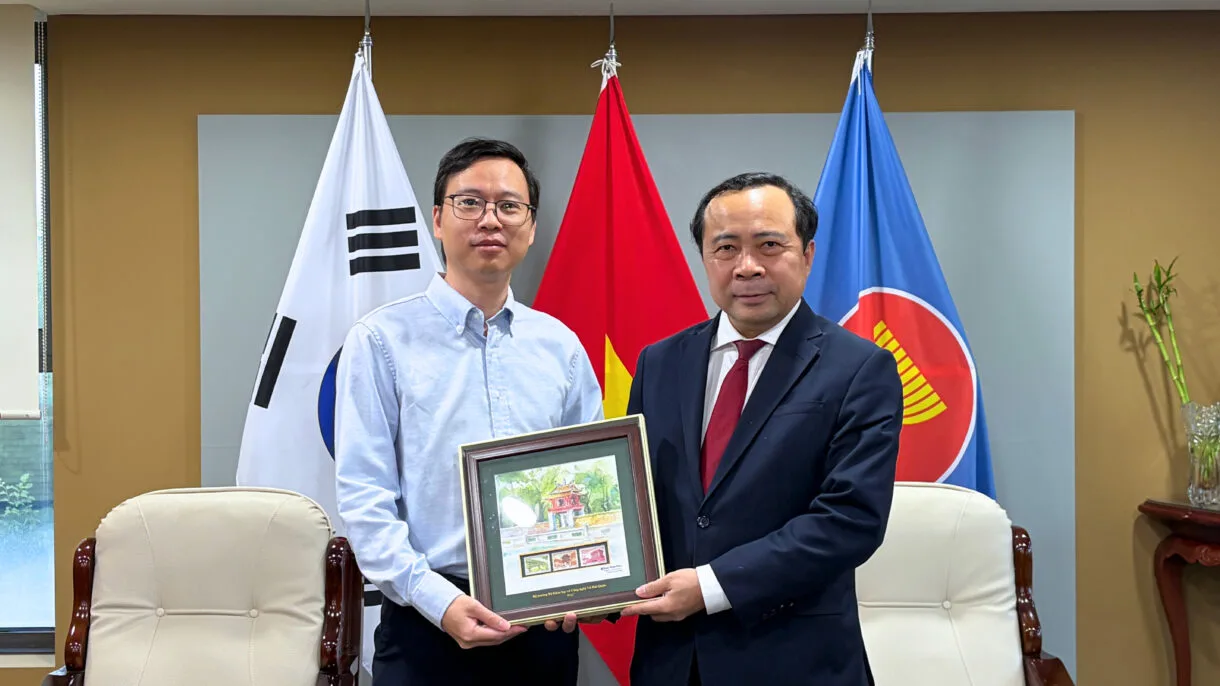
DEHA Global took part in the Vietnam-Korea Digital Forum 2026 on October 1, 2026, at the Embassy of Vietnam in Seoul, represented by Brian, Vice Chairman of DEHA Vietnam and CEO of DEHA Global. The company joined the B2B matching sessions, and follow-up working sessions with ICT companies in Seoul began on October 2.
The forum
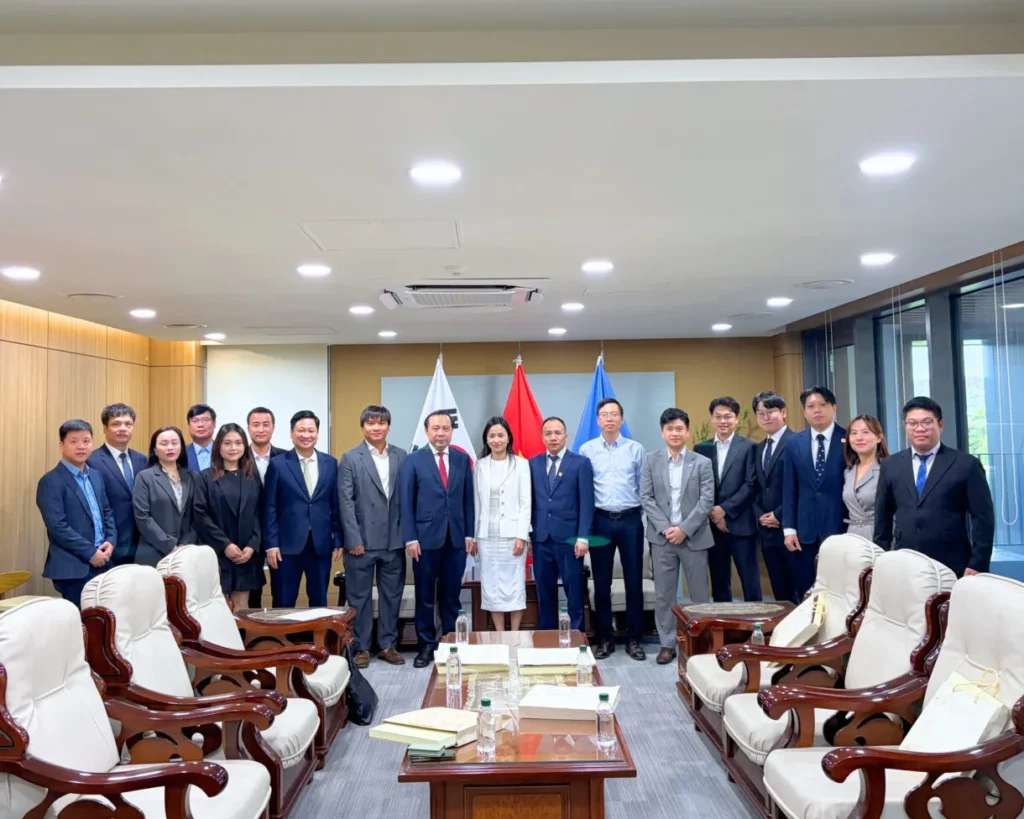
The forum was hosted by the Department of Digital Technology and Artificial Intelligence under Vietnam’s Ministry of Science and Technology, with support from Korea’s National IT Industry Promotion Agency (NIPA) and the Vietnam Software and IT Services Association (VINASA). More than 200 delegates attended.
NIPA’s announcement of the forum named DEHA among the key Vietnamese participating companies in the telecom and AI group, alongside FPT, CMC, LTS Group, SotaTek and HBLAB.
On September 30, DEHA Global’s CEO also attended the 12th Global ICT Leadership Forum in Seoul, hosted by Korea’s Ministry of Science and ICT with the National Information Society Agency (NIA), where Korean officials presented the country’s AI policy and national AI strategy.
From outsourcing to co-creation
Vietnam’s Minister of Science and Technology, Vu Hai Quan, called on businesses from both countries to move from pure outsourcing to joint research, design and product development, and to run proof-of-concept projects together from the outset.
Sessions covered AI and semiconductors, computing and cloud infrastructure, smart manufacturing, and how jointly developed technology can be commercialized and taken to international markets.
Business matching and follow-up sessions
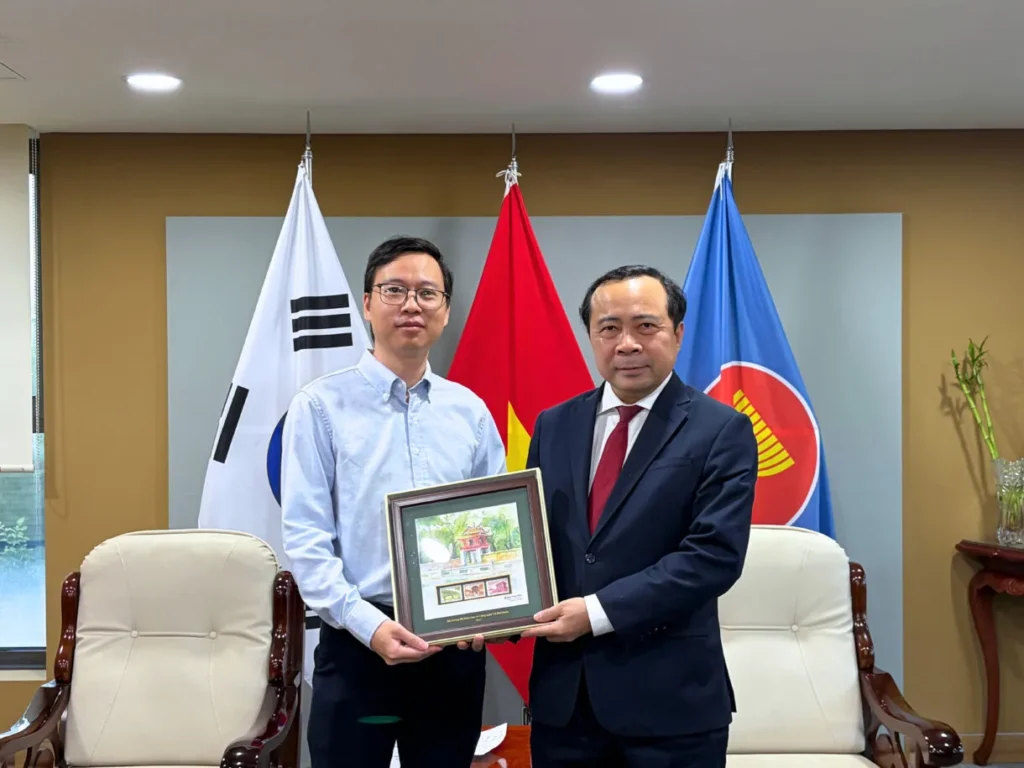
During the B2B matching sessions, DEHA Global met Korean companies interested in working with Vietnamese technology businesses. Follow-up working sessions with ICT companies in Seoul began on October 2.
Two observations from the trip:
- Korean companies value Vietnamese IT firms for their technical capability, professional working style and understanding of local culture.
- There are many areas where the two sides can build together, especially enterprise AI applications, one of DEHA’s strengths.
The follow-up working sessions focused on defining specific areas for cooperation, laying the groundwork for joint projects. DEHA Global will share further updates as these discussions progress.
Where a solutions partner fits
Korea is investing in its own AI foundation models and already has strong digital infrastructure. Building a model and putting AI to work inside a specific business process are different tasks.
AI use among Korean companies with 50 or more employees has grown more than sixfold, from 1.4% in 2017 to 9.2% in 2024, according to an analysis by the Korea Research Institute for Vocational Education and Training (KRIVET). Most of that market is still ahead. In an OECD survey conducted in late 2024, 53% of Korean SMEs not using generative AI agreed that employees lacking the right skills was a reason, the most cited barrier in Korea.
Putting AI to work depends on an organization’s own documents, systems, access rules and people. DEHA’s products address the document and knowledge side of that work. Oridex prepares documents, including scanned ones, for retrieval. Oriene AI answers questions with citations to the source documents. Both can run on-premise or in a private cloud.
DEHA’s approach is to take one workflow, work alongside the client’s team or a Korean partner’s team, and evaluate the result on the organization’s own documents.
How a first project can start
For a company that has not worked with an overseas technology partner before, the first question is usually how the two teams will work together. Starting with one workflow keeps the first project small enough to evaluate. Before development begins, both sides agree on:
- Which data is processed, and who can access it.
- Where the solution runs and which systems it connects to. This is a separate question from where the development team sits.
- What each team contributes. The client brings business context, workflow knowledge and requirements. DEHA brings the technical assessment and develops the agreed scope.
- How the result is evaluated, and who operates the solution afterwards.
The result gives both teams a basis for deciding whether to expand the collaboration.
Discuss your document AI workflow
Looking to improve a document or knowledge workflow? Contact DEHA Global to discuss your requirements and a suitable scope for an initial project.
Contact: Brian, Vice Chairman of DEHA Vietnam and CEO of DEHA Global
Email: moc.labolg-ahed@nairb
WhatsApp: +84 899 483 586
Korean website: https://deha-global.com/ko/
Sources
- NIPA, announcement of the 2026 Korea-Vietnam Digital Forum (September 23, 2026), in Korean.
- Ministry of Science and Technology of Vietnam, report on the Vietnam-Korea Digital Forum 2026 (October 2, 2026), in Vietnamese.
- KRIVET, The HRD Review, Vol. 29 No. 2 (July 31, 2026). Analysis of Statistics Korea’s Survey of Business Activities, covering companies with 50 or more employees and capital of KRW 300 million or more.
- OECD (2025), Generative AI and the SME Workforce, Table 4.1.